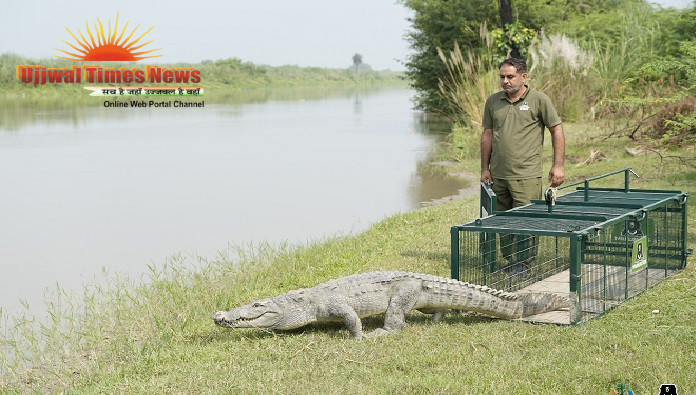
Firozabad,24 September 2026 (UTN). A stir rippled through the village of Paliya in the Jasrana area when a Marsh Crocodile, measuring approximately seven feet in length, was spotted in the middle of a farm. Upon seeing the reptile in the field, locals alerted the relevant authorities. Given the proximity to human habitation, the Forest Department immediately secured the area and mobilized a joint rescue team comprising the Uttar Pradesh Forest Department and Wildlife SOS to capture the crocodile. Upon receiving the information, a three-member Rapid Response Team from Wildlife SOS set out for the site without delay, covering a distance of over 100 kilometers. By the time the team arrived, Forest Department personnel had cordoned off the field and the surrounding area to bring the situation under control. Measures were taken to prevent villagers from approaching the crocodile and to ensure that no crowds gathered during the rescue operation, thereby avoiding any untoward incidents.
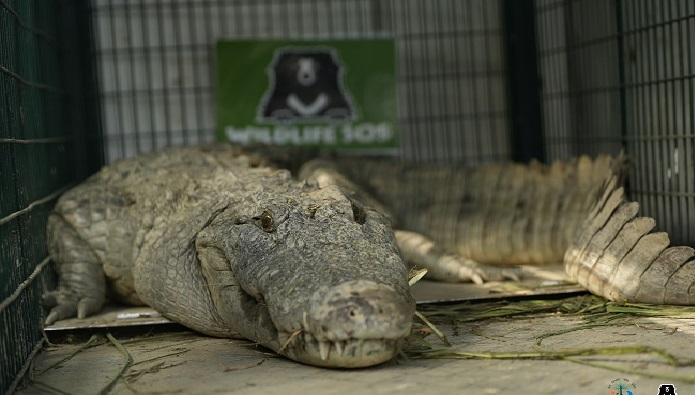
**Alarm caused by the discovery of the crocodile in the field**
The location in Paliya village where the crocodile was found is an agricultural area situated close to human settlements. Naturally, the presence of such a large crocodile in the field sparked concern among the villagers. The situation posed a potential risk to farmers working in the fields and residents living nearby.
Upon reaching the site, the Forest Department team first secured the area. Villagers were kept at a safe distance while the crocodile's movements were monitored. Subsequently, the Wildlife SOS Rapid Response Team assessed the situation on the ground and initiated the rescue operation.
**Team travels over 100 kilometers to reach the site**
Wildlife SOS received information about the crocodile's presence in the field during the morning hours. Immediately upon receiving the alert, the organization's three-member Rapid Response Team departed for the location. Traveling more than 100 kilometers to reach Paliya village, the team joined the Forest Department in carrying out the rescue operation. During the rescue operation, the team took action while considering the crocodile's condition, the surrounding environment, and public safety. The objective was to safely remove the crocodile from the farm without causing it any injury, thereby ensuring the safety of both the villagers and the wildlife.
**Forest Department Had Already Cordoned Off the Area**
Upon receiving information about the crocodile's presence in the farm, the Forest Department arrived at the scene and took control of the area. Officials and staff cordoned off the vicinity to prevent villagers or passersby from getting too close to the crocodile.
According to experts, crowds of people can pose a significant challenge during the rescue of large wildlife. Sudden noise, human movement, or attempts to get too close can agitate the animal, leading to unpredictable behavior. In such situations, clearing the site and allowing the trained rescue team to work without interference is crucial.
**Seven-Foot-Long Crocodile Found Healthy**
Following the successful rescue operation, the crocodile was examined and found to be in good health. No visible injuries or signs of health issues were detected on its body.
Once its health was confirmed to be stable, the crocodile was safely removed from the site. It was then transported to a suitable natural habitat and released. This ensured the crocodile's safety in a natural environment while eliminating the risk of human-wildlife conflict near the village.
**Fluctuations in Water Levels Can Increase Wildlife Movement**
According to conservation experts from Wildlife SOS, the agricultural field where the crocodile was found is located near a canal. Seasonal rains and fluctuations in water levels can cause crocodiles to stray from their usual territories. In areas connected to water bodies, rising water levels can sometimes prompt wildlife to venture into new locations.
Consequently, there remains a persistent possibility of wildlife presence in villages situated near canals, rivers, ponds, and other water bodies. Wildlife movement can increase, particularly during the monsoon season, due to changes in water levels and natural conditions.
**Timely Information Ensures a Safe Rescue Operation**
Geeta Seshamani, Co-founder and Secretary of Wildlife SOS, stated that wild animals do not recognize the boundaries between human settlements and their natural habitats. Seasonal changes and fluctuations in water levels often lead wildlife to areas outside their usual habitats.
She noted that in this instance, the rescue operation was successfully and safely concluded thanks to timely information reaching the Forest Department and the cooperation of local residents. Receiving information promptly gave the Forest Department and the rescue team ample opportunity to bring the situation under control and ensure public safety.
*Public Awareness: A Crucial Part of Wildlife Conservation*
Baiju Raj M.V., Director of Conservation Projects at Wildlife SOS, explained that the field where the crocodile was found is located near a canal. Seasonal rains and rising water levels can cause crocodiles to venture out of their usual habitats, increasing the likelihood of unexpected encounters between humans and wildlife.
He emphasized that timely reporting and community awareness are vital in such situations. If a villager or farmer spots a crocodile near a field, canal, pond, or water body, they should inform the relevant forest department authorities rather than attempting to capture or approach the animal themselves.
*Appeal to Villagers: Maintain Distance If a Crocodile Is Spotted*
Wildlife experts advise that upon spotting a crocodile, people should avoid approaching, surrounding, or provoking it out of curiosity, or getting close to take photos and videos. Maintaining a safe distance is essential, especially when dealing with a large crocodile—such as the seven-foot-long one in this instance.
In such situations, the safest course of action is to immediately notify the local forest department. A trained rescue team assesses the circumstances to determine the safest way to remove the animal and release it into a suitable natural habitat.
Community Cooperation Essential to Prevent Human-Wildlife Conflict*
In many rural areas, the distance between agricultural land and natural wildlife habitats is minimal. This is particularly common near rivers, canals, ponds, and waterlogged areas. Residents of such regions need to remain vigilant regarding wildlife activity.
The incident in Paliya village underscores the importance of notifying the relevant authorities in a timely manner—rather than panicking—when wildlife strays close to human settlements. The operation was carried out in a controlled manner after the forest department secured the area and the trained Wildlife SOS team arrived.
Marsh Crocodiles Enjoy High-Level Legal Protection in India
The Marsh Crocodile (*Crocodylus palustris*) is also commonly known as 'Magar'. It is one of the major crocodile species found in India and primarily inhabits areas associated with various freshwater bodies.
This species is classified as 'Vulnerable' on the IUCN Red List. In India, it enjoys the highest level of legal protection under Schedule I of the Wildlife (Protection) Act, 1972.
The objective of this legal protection is to safeguard the animal against poaching, capture, and other forms of harm. Therefore, if a crocodile is spotted near farmlands or human settlements, it is crucial for people to inform the Forest Department rather than attempting to capture or harm the animal themselves.
**Need for heightened vigilance near canals and water bodies**
In Firozabad and surrounding rural areas, agricultural land is often situated close to water bodies, canals, and other water structures. In such areas, fluctuations in water levels during the monsoon or seasonal rains can alter the movement patterns of wildlife.
While crocodiles generally prefer staying near water, changing conditions may cause them to venture out of their water bodies onto the surrounding land. Consequently, farmers working in fields located along canals or ponds need to exercise particular caution.
**Released into natural habitat after rescue**
In the final phase of the rescue operation, the crocodile was safely removed from the site. After a medical examination confirmed it was healthy, it was relocated to a suitable natural habitat. This intervention not only saved the animal's life but also eliminated a potential threat to the villagers.
The incident also highlighted the importance of coordination between the Forest Department, trained rescue organizations, and the local community when wildlife strays into human settlements. Timely information and a controlled rescue process ensured the situation was handled safely. Expert Advice: Report Wildlife Sightings; Do Not Attempt to Intervene Personally
Wildlife conservation experts advise that if a wild animal is spotted in rural areas, local residents should not attempt to capture or drive it away. Actions such as cornering the animal, pelting it with stones, or gathering in a crowd can aggravate the situation.
Extra caution is required when dealing with powerful wildlife like crocodiles, as predicting their movements can be difficult for the average person. Therefore, the most important steps are to inform the Forest Department or an authorized rescue team and to maintain a safe distance until they arrive.
The safe rescue of a seven-foot-long marsh crocodile in Paliya village exemplifies this coordinated approach; timely reporting, the Forest Department's promptness, cooperation from locals, and the expertise of the Wildlife SOS Rapid Response Team ensured the animal was safely relocated to its natural habitat.
Wildlife SOS.