


Tuesday, December 23, 2025

National

spot_img

SAMBAR STAG SAFELY RESCUED AND RELOCATED BY FOREST DEPARTMENT AND WILDLIFE SOS IN MATHURA!

Following this, the stag was safely relocated to a suitable natural habitat, ensuring both the animal’s well-being and the safety of local residents.

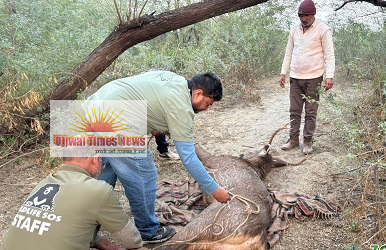
Mathura, 20 December 2025 (UTN).Collaborative response ensures prompt rescue and relocation of vulnerable sambar deer in Mathura A swift and coordinated operation led to the safe rescue and relocation of a male sambar deer from Loriha Patti village in Goverdhan range of Mathura. The adult sambar was spotted wandering inside the village, prompting concerned residents to immediately alert the nearby forest department about the situation. Upon seeing the large deer wandering in the village, terrified people rushed to inform the nearby forest department officials from where the Wildlife SOS rapid response unit was alerted through its 24×7 emergency helpline (+91 9917109666). Responding without delay, a six-member Wildlife SOS team comprising a veterinary doctor and trained rescuers rushed to the location.
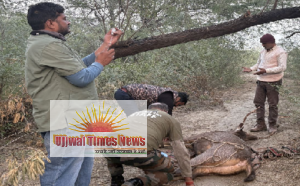
After carefully securing the animal, the team conducted a thorough on-site medical examination and observed that the sambar was exhausted and had superficial injuries on the hind region. Immediate first aid and necessary treatment was administered to stabilise his condition. Following this, the stag was safely relocated to a suitable natural habitat, ensuring both the animal’s well-being and the safety of local residents.

Venkata Sreekar Patel IFS, Divisional Forest Officer, Mathura, said, “The prompt action taken by villagers ensured that both the forest department and Wildlife SOS teams responded seamlessly to the situation. Such cooperation plays a crucial role in mitigating human-wildlife conflict. We are committed to ensuring that injured wildlife receives timely assistance and the best possible care.”

Kartick Satyanarayan, Co-founder and CEO of Wildlife SOS, said, “Timely information from the local community and the Forest Department allowed our team to respond quickly and provide the necessary medical care to the deer. This rescue highlights the role of people’s awareness and importance of acting quickly in wildlife conservation efforts.”

Dr. Ilayaraja S, Deputy Director of Veterinary services at Wildlife SOS, stated, “Upon examination, the sambar was found exhausted and had superficial injuries on its hind region, which might have been caused while navigating through the village environment. Immediate on-site treatment was administered to address the injuries and minimise stress to the animal.”

Baiju Raj M.V, Director of Conservation Projects at Wildlife SOS, added, “Sambar deer often enter human-dominated landscapes due to habitat fragmentation and search for food or water. Relocating the animal to a safer environment was essential to prevent further stress or injury and to ensure its long-term survival.”

The sambar deer (Rusa unicolor) is one of the largest deer species found in India and is protected under the Wildlife (Protection) Act, 1972. Listed as ‘Vulnerable’ on the IUCN Red List, they primarily inhabit forests and grasslands. However, habitat loss and increasing human encroachment often force them into human settlements.

Shresatha Pachori
Senior Press Officer
Wildlife SOS.

International

spot_img

SAMBAR STAG SAFELY RESCUED AND RELOCATED BY FOREST DEPARTMENT AND WILDLIFE SOS IN MATHURA!

Following this, the stag was safely relocated to a suitable natural habitat, ensuring both the animal’s well-being and the safety of local residents.

Mathura, 20 December 2025 (UTN).Collaborative response ensures prompt rescue and relocation of vulnerable sambar deer in Mathura A swift and coordinated operation led to the safe rescue and relocation of a male sambar deer from Loriha Patti village in Goverdhan range of Mathura. The adult sambar was spotted wandering inside the village, prompting concerned residents to immediately alert the nearby forest department about the situation. Upon seeing the large deer wandering in the village, terrified people rushed to inform the nearby forest department officials from where the Wildlife SOS rapid response unit was alerted through its 24×7 emergency helpline (+91 9917109666). Responding without delay, a six-member Wildlife SOS team comprising a veterinary doctor and trained rescuers rushed to the location.

After carefully securing the animal, the team conducted a thorough on-site medical examination and observed that the sambar was exhausted and had superficial injuries on the hind region. Immediate first aid and necessary treatment was administered to stabilise his condition. Following this, the stag was safely relocated to a suitable natural habitat, ensuring both the animal’s well-being and the safety of local residents.

Venkata Sreekar Patel IFS, Divisional Forest Officer, Mathura, said, “The prompt action taken by villagers ensured that both the forest department and Wildlife SOS teams responded seamlessly to the situation. Such cooperation plays a crucial role in mitigating human-wildlife conflict. We are committed to ensuring that injured wildlife receives timely assistance and the best possible care.”

Kartick Satyanarayan, Co-founder and CEO of Wildlife SOS, said, “Timely information from the local community and the Forest Department allowed our team to respond quickly and provide the necessary medical care to the deer. This rescue highlights the role of people’s awareness and importance of acting quickly in wildlife conservation efforts.”

Dr. Ilayaraja S, Deputy Director of Veterinary services at Wildlife SOS, stated, “Upon examination, the sambar was found exhausted and had superficial injuries on its hind region, which might have been caused while navigating through the village environment. Immediate on-site treatment was administered to address the injuries and minimise stress to the animal.”

Baiju Raj M.V, Director of Conservation Projects at Wildlife SOS, added, “Sambar deer often enter human-dominated landscapes due to habitat fragmentation and search for food or water. Relocating the animal to a safer environment was essential to prevent further stress or injury and to ensure its long-term survival.”

The sambar deer (Rusa unicolor) is one of the largest deer species found in India and is protected under the Wildlife (Protection) Act, 1972. Listed as ‘Vulnerable’ on the IUCN Red List, they primarily inhabit forests and grasslands. However, habitat loss and increasing human encroachment often force them into human settlements.

Shresatha Pachori
Senior Press Officer
Wildlife SOS.

National

spot_img

International

spot_img
RELATED ARTICLES